
 By vmg@gmail.com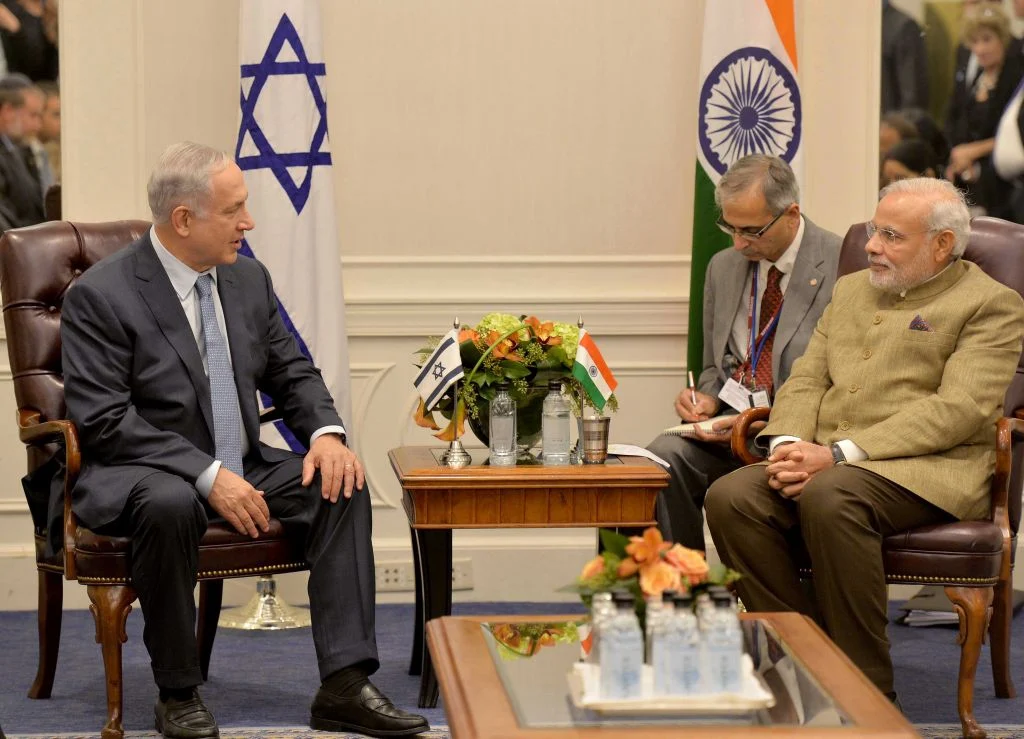
India’s response to the ongoing Israel–Iran conflict appears, on the surface, to balance ties between Tel Aviv and the Arab world. But a closer reading of events suggests that New Delhi’s position is being shaped less by Israel or Iran — and more by the United Arab Emirates (UAE).
At the centre of this diplomatic choreography are two phone calls and two key meetings involving Prime Minister Narendra Modi and UAE President Sheikh Mohamed bin Zayed Al Nahyan.
📞 The Two Phone Calls That Set the Tone
After Israel’s strikes on Iran and subsequent Iranian retaliation targeting Gulf infrastructure:
- PM Modi spoke first with Sheikh Mohamed bin Zayed.
- He later spoke with Israeli Prime Minister Benjamin Netanyahu.
The tone of both conversations differed significantly.
🇦🇪 UAE Call:
- Modi referred to MBZ as his “brother”.
- He strongly condemned attacks on the UAE.
- Expressed solidarity with the Emirates.
- Avoided directly naming Iran.
🇮🇱 Israel Call:
- Expressed “concerns over recent developments”.
- Called for “early cessation of hostilities”.
- No explicit solidarity statement.
- Did not use personal terms like “friend” or “brother”.
The linguistic nuance is diplomatically significant.
🤝 Why MBZ Is Different
Among global leaders, Sheikh Mohamed bin Zayed is arguably Modi’s closest personal ally.
Modi has publicly referred to him as “brother” more frequently than any other major world leader. By contrast:
- Vladimir Putin — called “friend”
- Donald Trump — called “friend”
- Barack Obama — called “friend”
- Netanyahu — often “friend”
This distinction signals more than symbolism — it reflects deep strategic convergence.
🗓️ The Two Crucial Meetings
Two recent meetings are believed to have aligned India and UAE before escalation began:
- 19 January – MBZ met Modi in New Delhi.
- A month later – Modi met Abu Dhabi’s Crown Prince during the AI Summit in Delhi.
These engagements reportedly helped synchronize positions ahead of potential US-Israel action against Iran.
🌍 India’s Position Mirrors UAE
Like the UAE, India has:
- Called for de-escalation.
- Avoided endorsing Israeli military action.
- Stopped short of criticising Iran directly.
- Emphasised regional stability.
While UAE maintains diplomatic ties with Israel, it is cautious about escalation that could endanger Gulf infrastructure.
India’s position closely reflects this balancing approach.
💰 The Economic Factor
Beyond diplomacy, economics plays a major role.
The UAE:
- Hosts one of the largest Indian expatriate populations.
- Is a key energy and trade partner.
- Serves as a major investment hub for Indian businesses.
- Houses significant investments from India’s corporate and political elite.
Dubai, in particular, has become a preferred base for Indian business leaders and high-net-worth individuals.
Any instability in the UAE has ripple effects for Indian economic interests.
📱 Domestic Political Sensitivity
Following Iranian strikes on Emirati cities, social media reactions in India sparked tensions.
A BJP MP made controversial remarks about Indians living in Dubai, triggering backlash.
The BJP’s foreign affairs in-charge publicly condemned anti-UAE comments — a rare move indicating the sensitivity of India-UAE ties.
🧭 Strategic Calculation
India’s West Asia policy today is built on:
- Maintaining ties with Israel
- Preserving energy and trade links with Gulf monarchies
- Avoiding open alignment in sectarian or geopolitical blocs
- Expanding leverage amid regional uncertainty
By aligning its tone with UAE rather than Israel’s military posture, New Delhi appears to be prioritising:
- Economic security
- Diaspora safety
- Gulf partnerships
- Long-term regional influence
🔎 The Bigger Picture
India did not speak directly to Iran at the leadership level during the initial escalation, signalling alignment with the US–Israel–UAE axis.
However, its language avoided outright endorsement of Israeli action.
This calibrated ambiguity reflects a careful diplomatic balance — with the UAE as the pivot.
📌 Key Takeaways
- Modi’s first outreach was to UAE, not Israel.
- Tone of statements reveals closer alignment with UAE.
- Economic and diaspora interests shape India’s calculus.
- India calls for de-escalation, mirroring UAE’s position.
- UAE has emerged as India’s most strategically important partner in West Asia.